© Gina Florio Sous 2016

Showing posts with label favorite artists. Show all posts
Showing posts with label favorite artists. Show all posts
Wednesday, September 28, 2016
Proko Video: Sketching People with Stephen Silver
Online figure drawing teacher Stan Prokopenko recently produced this 15-minute video, wherein he observes and talks with acclaimed character designer Stephen Silver while Stephen sketches people in public. I found the whole thing informative, entertaining and chock full of useful tips - it got me just in the right mood to go out and draw people of all kinds in their natural habitat.

Tuesday, December 2, 2014
Song of Storms
It's a much-needed rainy day here in Los Angeles - it's been coming down all day! - so what better time to share this delightful piece of artwork I found on the interwebs a little while ago.

I don't often share / showcase individual pieces of art by other artists on the blog, but this one really spoke to me for some reason. I love the style, the lighting / mood, the color palette, all the little narrative elements. It's an illustration that rewards looking closely. The artist is Matt Rockefeller, a recent graduate of the Maryland Institute of Art.
CTN recap coming soon!

I don't often share / showcase individual pieces of art by other artists on the blog, but this one really spoke to me for some reason. I love the style, the lighting / mood, the color palette, all the little narrative elements. It's an illustration that rewards looking closely. The artist is Matt Rockefeller, a recent graduate of the Maryland Institute of Art.
CTN recap coming soon!
© Gina Florio 2014
Monday, May 12, 2014
Self Portrait, Helen Chen style
I Helen Chen'd myself.

I've wanted a cartoon self-portrait to put in my Blogger profile for a while now. After I read Muddy Colors' recent post on Mingjue Helen Chen, I fell in love with her style and decided to try illustrating myself in that way. Ultimately it's not a style I'll be keeping (mostly because it's not mine to begin with!), but it was a great exercise in texture and I definitely think I will be adding more texture to future paintings.
Read the Muddy Colors post, Mingjue & Me, for insight as well as a real-time video of her process (I LOVE real-time videos!), and check out her blog for some truly great art. She also put up a post with links to the brushes she uses. I know it's not the brush that makes the artist, but as someone still building and experimenting with their Photoshop brush library, these helped me a lot - they handle very nicely.
Here's my favorite recent piece of hers - I love the idea of reinterpreting comic book costumes into casual outfits! Anything that appeals to my fangirl side and my "omg, clothes" side is a win in my book.

I've wanted a cartoon self-portrait to put in my Blogger profile for a while now. After I read Muddy Colors' recent post on Mingjue Helen Chen, I fell in love with her style and decided to try illustrating myself in that way. Ultimately it's not a style I'll be keeping (mostly because it's not mine to begin with!), but it was a great exercise in texture and I definitely think I will be adding more texture to future paintings.
Read the Muddy Colors post, Mingjue & Me, for insight as well as a real-time video of her process (I LOVE real-time videos!), and check out her blog for some truly great art. She also put up a post with links to the brushes she uses. I know it's not the brush that makes the artist, but as someone still building and experimenting with their Photoshop brush library, these helped me a lot - they handle very nicely.
Here's my favorite recent piece of hers - I love the idea of reinterpreting comic book costumes into casual outfits! Anything that appeals to my fangirl side and my "omg, clothes" side is a win in my book.
© Gina Florio 2014
Tuesday, October 29, 2013
Artist Discovery: Chris Oatley
I am somewhat obsessive about learning and reading about the world of concept art. We're lucky to live in this digital age where we have access to incredible tutorials, anecdotal blog posts, concept art projects, tips, and more on the web. It's an age of sharing and cooperating and learning together across continents. I often discover new artists just by following artists that I already know and love, who talk to or post links to the artists that THEY love. Today I discovered Chris Oatley, who has recorded several podcasts with one of my favorite artists, Noah Bradley.
On top of these two occasions of recording together, Chris's regularly solo 'Artcast' and blog is filled with a ton of information, everything from his daily routine to avoiding artistic burnout to health insurance for artists... AND free tutorials... AND he runs an online digital painting class. I'm incredbly thankful to people like Chris and Noah, who spend their very valuable time passing down information, free of charge, to aspiring artists like myself.
On top of these two occasions of recording together, Chris's regularly solo 'Artcast' and blog is filled with a ton of information, everything from his daily routine to avoiding artistic burnout to health insurance for artists... AND free tutorials... AND he runs an online digital painting class. I'm incredbly thankful to people like Chris and Noah, who spend their very valuable time passing down information, free of charge, to aspiring artists like myself.
© Gina Florio 2013
Wednesday, April 3, 2013
Austin Kleon - Shut Up and Write the Book
I wrote about productivity and distraction a few weeks ago. In his recent blog post, writer Austin Kleon (author of one of my favorite books on creativity and artmaking, Steal Like An Artist) shares his methods for staying focused.

© Gina Florio 2013

He touches on things that I'm definitely guilty of - namely, doing things that seem like they're productive (reading books about drawing, watching drawing tutorials, writing a blog about drawing) but that aren't actually productive. Well, they are, to a point - but after so much of it, I'm doing it in lieu of actually DRAWING. That's the main reason I started doing the daily sketches. Like Noah Bradley says - "If you want to make art, then you need to MAKE ART."
Kleon's fourth point - "Less notification, more meditation" - is intriguing to me. I find that when I'm working, whether it's drawing OR editing, I can usually start off the day with a good burst of energy and momentum, but as the day goes on I suffer from scatterbrained-ness and distraction more and more. I've done a few things recently to help remedy this.
1. Going cold turkey. I installed the Firefox add-on Leechblock, and now I can't get on Facebook, Reddit, etc. during working hours, except during lunchtime. I've also turned off all notifications on my phone. The only time it makes a peep is if someone is calling or texting me.
2. Make a plan. I've been writing my goals for the day on a post it note every morning and sticking it up on my computer when I get to work. If necessary I have breakdowns for each task. I try not to waste time doing anything not pertaining to those tasks.
3. Meditate. - I have always remembered telling someone about my issues with distraction (a year or two ago) and they immediately said "Meditate. I sit still for 30 minutes every morning, and my whole day is better." I had never given it much thought, until I read Kleon's post - in which he linked to a post about meditating that put my mind more at ease about it. I've only tried it once, but I did come out of it feeling more focused and calmer.
In general, I'm trying to keep in mind that all the little things we get caught up with in our day-to-day lives don't really matter. I have a tendency to try to do too much with too little time, take shortcuts and rush things - but if I just slowww dowwwn, do one thing at a time to the best of my ability, and really absorb and learn from whatever I'm doing, I will lead a much less frantic and more fulfilling life. (We can all dream, right?)
© Gina Florio 2013
Thursday, March 7, 2013
Attend
The inspiration for this post came from this short documentary on the making of John Mayer's new album cover art. John Mayer, on a long, rambling search for an ephemeral look that he couldn't quite describe, eventually came across David A. Smith from England, who may be one of the last people still doing the meticulous but beautiful work of traditionally hand-painted and lettered signage and glasswork.
While I watched this, I was reminded of a documentary my parents rented when I was in high school called 'Rivers and Tides.' It chronicles the work of Andy Goldsworthy, a Scottish 'sculptor' who works almost exclusively out in nature. His creations are not permanent - they are meant to fade, slowly but surely, back into the wild from which they came. As Goldsworthy says, "Each work grows, stays, decays – integral parts of a cycle which the photograph [of the work] shows at its heights, marking the moment when the work is most alive. There is an intensity about a work at its peak that I hope is expressed in the image. Process and decay are implicit."
It was without doubt the slowest film I have ever seen, in every sense of the word. I'm fairly certain I napped through part of it. But looking back, I think it influenced me a lot. The trailer is below just to give you a sense of his work. (The trailer does its best to convince you it was filmed in the late 70s, but don't be fooled, it was made in 2004.)
Both artists go through an incredibly painstaking process to create beautiful works without ever sitting down at a computer. They must have an extraordinary amount of patience and take extreme care when working, because one wrong move could ruin hours upon hours of work. David A. Smith's medium of choice is LITERALLY as fragile as glass. Because, you know... it is glass. Jokes. Tell everyone you read a hilarious blog today.
Patience, as well as hand-made work, seems to have gone out the window lately. It seems cliché to write about the fast-paced, always-plugged-in world that we live in, but it's true. And yes I appreciate the irony of writing a blog post about this problem. But quality work that takes time and is done by hand is harder and harder to come by. Everyone wants everything as fast as possible.
I was raised Quaker. (Yes they still exist, no they didn't die out, no my family doesn't live on a farm, yes we can use electricity, no my dad doesn't wear a funny hat. You are almost definitely thinking of the Amish, or the guy on the Quaker Oats box.) Quakers are probably best described as the hippie faction of Christianity - they believe in simplicity, solutions through peaceful means, and in "finding the light within," emphasizing a personal and direct relationship with god. The Quaker churches (called 'meetings') I went to also did not have a conventional service. The gathering would generally sit in silence for an hour - basically, group meditation - and if someone had a thought they'd like to share, they could stand and speak aloud. I have fond memories of these services, and believe they taught me the two very important lessons of learning to sit quietly and patiently and turn my focus inwards (probably something I do too much of these days), and also to pay attention to what other people might be thinking or feeling.
Patience is an important thing for children to learn, I think. The name of this post comes from the French word, attend, which literally means 'wait', and which in turn comes from the book I'm reading, Bringing Up Bebé, about an American mother's experience having and raising children in Paris. (NO I'm not expecting children soon, it's just an interesting read.) The French seem to have the child-rearing thing down pat. One among their many great methods is to teach children that instant gratification is just not possible. 'Attend' is said to children all the time, to teach them patience and to help them understand they must be considerate of others before getting what they want.
I am glad to have learned patience so early on. Yet, I'm still certain I would not have the patience to create work on the level of what David A. Smith or Andy Goldsworthy do.
I actually feel quite impatient lately, mostly with my art. I understand why. I realize that I'll probably always have a complicated relationship with my own artwork, but right now the results of my work are so far from the original conception that it's hard not to want to skip to the point where I can just DRAW and have it at least somewhat resemble what I'm thinking about. My skills just aren't there yet. I often catch myself looking for quick fixes. But I think it's good to remember that the journey is of the reward, and that the process of struggling is important. It's how you learn, how you earn the skill.
I may keep a blog, but I also think it's important to step away from the internet, go out into the real world, and do things by hand. (It's Rule #4 in Steal Like an Artist: Use Your Hands. It recommends keeping separate desks for traditional work and for your computer/digital work, if you have the space. Can't wait till I can do that.) I have no doubt that my forgetfulness, impatience, and scatterbrained state of mind lately is caused by my constant proximity to computers and the internet. I've focused on setting boundaries for myself for the past few months to keep distraction at a minimum. I try to remember: Do one thing at a time. Take the time to really look, really think. Have patience. Slow down. Wait.
While I watched this, I was reminded of a documentary my parents rented when I was in high school called 'Rivers and Tides.' It chronicles the work of Andy Goldsworthy, a Scottish 'sculptor' who works almost exclusively out in nature. His creations are not permanent - they are meant to fade, slowly but surely, back into the wild from which they came. As Goldsworthy says, "Each work grows, stays, decays – integral parts of a cycle which the photograph [of the work] shows at its heights, marking the moment when the work is most alive. There is an intensity about a work at its peak that I hope is expressed in the image. Process and decay are implicit."
It was without doubt the slowest film I have ever seen, in every sense of the word. I'm fairly certain I napped through part of it. But looking back, I think it influenced me a lot. The trailer is below just to give you a sense of his work. (The trailer does its best to convince you it was filmed in the late 70s, but don't be fooled, it was made in 2004.)
Both artists go through an incredibly painstaking process to create beautiful works without ever sitting down at a computer. They must have an extraordinary amount of patience and take extreme care when working, because one wrong move could ruin hours upon hours of work. David A. Smith's medium of choice is LITERALLY as fragile as glass. Because, you know... it is glass. Jokes. Tell everyone you read a hilarious blog today.
Patience, as well as hand-made work, seems to have gone out the window lately. It seems cliché to write about the fast-paced, always-plugged-in world that we live in, but it's true. And yes I appreciate the irony of writing a blog post about this problem. But quality work that takes time and is done by hand is harder and harder to come by. Everyone wants everything as fast as possible.
I was raised Quaker. (Yes they still exist, no they didn't die out, no my family doesn't live on a farm, yes we can use electricity, no my dad doesn't wear a funny hat. You are almost definitely thinking of the Amish, or the guy on the Quaker Oats box.) Quakers are probably best described as the hippie faction of Christianity - they believe in simplicity, solutions through peaceful means, and in "finding the light within," emphasizing a personal and direct relationship with god. The Quaker churches (called 'meetings') I went to also did not have a conventional service. The gathering would generally sit in silence for an hour - basically, group meditation - and if someone had a thought they'd like to share, they could stand and speak aloud. I have fond memories of these services, and believe they taught me the two very important lessons of learning to sit quietly and patiently and turn my focus inwards (probably something I do too much of these days), and also to pay attention to what other people might be thinking or feeling.
Patience is an important thing for children to learn, I think. The name of this post comes from the French word, attend, which literally means 'wait', and which in turn comes from the book I'm reading, Bringing Up Bebé, about an American mother's experience having and raising children in Paris. (NO I'm not expecting children soon, it's just an interesting read.) The French seem to have the child-rearing thing down pat. One among their many great methods is to teach children that instant gratification is just not possible. 'Attend' is said to children all the time, to teach them patience and to help them understand they must be considerate of others before getting what they want.
I am glad to have learned patience so early on. Yet, I'm still certain I would not have the patience to create work on the level of what David A. Smith or Andy Goldsworthy do.
I actually feel quite impatient lately, mostly with my art. I understand why. I realize that I'll probably always have a complicated relationship with my own artwork, but right now the results of my work are so far from the original conception that it's hard not to want to skip to the point where I can just DRAW and have it at least somewhat resemble what I'm thinking about. My skills just aren't there yet. I often catch myself looking for quick fixes. But I think it's good to remember that the journey is of the reward, and that the process of struggling is important. It's how you learn, how you earn the skill.
I may keep a blog, but I also think it's important to step away from the internet, go out into the real world, and do things by hand. (It's Rule #4 in Steal Like an Artist: Use Your Hands. It recommends keeping separate desks for traditional work and for your computer/digital work, if you have the space. Can't wait till I can do that.) I have no doubt that my forgetfulness, impatience, and scatterbrained state of mind lately is caused by my constant proximity to computers and the internet. I've focused on setting boundaries for myself for the past few months to keep distraction at a minimum. I try to remember: Do one thing at a time. Take the time to really look, really think. Have patience. Slow down. Wait.
© Gina Florio 2013
Monday, March 4, 2013
'Funny Bones' - short documentary of caricaturist John Kascht
One thing I've been struggling with while attempting to draw my 90's cover band friends is capturing a resemblance. At this point, I can draw something that looks like a face. But a face that looks like my friend's face is harder to do. And a face that looks like my friend, from different angles, every time? Forget about it.
I recalled watching this short documentary some time ago, and so I watched it again last week to try to gain some insight into how to do it. While I doubt I'll have time to make sculptures, it definitely helped in some ways. But I still can't get my head around one thing - how does he draw a person multiple times, and wildly vary the proportions of their facial features every time - and yet, every time, it STILL looks like that person? Obviously, capturing a resemblance has nothing to do with facial features' proportional relationships. It's something else. Something fleeting, that I don't know quite how to capture on paper yet.
I recalled watching this short documentary some time ago, and so I watched it again last week to try to gain some insight into how to do it. While I doubt I'll have time to make sculptures, it definitely helped in some ways. But I still can't get my head around one thing - how does he draw a person multiple times, and wildly vary the proportions of their facial features every time - and yet, every time, it STILL looks like that person? Obviously, capturing a resemblance has nothing to do with facial features' proportional relationships. It's something else. Something fleeting, that I don't know quite how to capture on paper yet.
© Gina Florio 2013
Thursday, February 28, 2013
Steve Smulka's Glass paintings
These are oil paintings. So. Stick that in your pipe and smoke it.


About a gazillion more of these can be found on Steve Smulka's website, so go ahead and spend some time there if you feel like feeling unaccomplished today. (He also has a collection of female figure paintings, which are very beautiful as well.) Usually, hyper-realistic paintings have a tendency to leave me a bit cold - I'm more partial to a looser, atmospheric style and more fantastical/caricatured subjects - but I can't help but admire these. I'd love to see a process breakdown. How do you even start a painting like this?
Originally found on the Lines and Colors blog.


Originally found on the Lines and Colors blog.
© Gina Florio 2013
Thursday, January 31, 2013
The Future of Art and Entertainment - Part 2
In "Part 1" I talked about how a new virtual reality technology could potentially change the way we experience videogames, film, and "online" activities such as shopping or talking with friends. I think this current drive towards ever more "3D" and "immersive" and "real" entertainment experiences is the symptom of a cultural desire to blur the line between the tangibility of everyday life and the excitement and wonder of our digital lives.
In "Part 3" I'll talk about how this ever-increasing technology relates to art production - but today I thought I'd just share a few examples of art that blurs the line between 2D and 3D in really interesting ways.
3D movies are obviously big right now, but they've been around for a while. I remember going to see the 3D Muppet movie in Disneyworld when I was 5 years old.
In actuality, 3D movies have existed for almost as long as film itself - the first 3D projection system and viewing mechanism was patented in the late 1890s by British film pioneer William Friese-Greene, and the first 3D camera rig was patented in 1900 by Frederic Eugene Ives. The trend was actually very popular in the early 1950s, and then enjoyed a revival in the 80's and 90's (mostly as an amusement park gimmick) before growing into the big-budget filmmaking technique we are enjoying (or not, depending on your point of view) at the moment. We can buy our own home 3D televisions, sports games and concerts are broadcast in 3D, and filmmakers like Peter Jackson and James Cameron are reportedly never going back to 2D, touting it as "the way forward for film."
For me, working within the tv/film industry, it's cool to hate on 3D as a gimmick used mainly to drive up prices. Generally, if a movie is available in both 2D and 3D, I'll see the 2D version. But in my personal opinion, 3D looks best in animated films. I remember the first really great 3D experience I had was going to see the movie Coraline in 2009.

At one point early on in the movie, Coraline finds a secret passageway to a parallel universe. As she peeks into the hole, that tunnel (pictured above) expands out in front of her, away from the audience, into the distance. I remember gasping out loud when I saw it. It looked like I could walk right into it.
The other really great 3D experience I've had was seeing one of my favorite films, How To Train Your Dragon, in IMAX 3D. The flight sequences were absolutely unreal.
3D film has become almost the norm now. And a new trend is just starting - with December's release of The Hobbit: An Unexpected Journey, we've seen the debut of Peter Jackson's now-infamous 48-frame-per-second high frame rate which critics have derided as looking "sped up" at best, and some combination of a soap opera and a videogame at worst. But the main argument FOR this technology is that it looks more "real" - that it's like you're looking through a window at the scene.
Jackson says: "As a filmmaker, I try to make my movies immersive. I want to draw the audience out of their seats, and pull them into the adventure. We live in a rapidly advancing digital age. Technology is being continually developed that can enhance and enrich the cinema-going experience. High Frame Rate shooting for a mainstream feature film has only become viable in the last year or two, and yet we live in an age of increasing home entertainment. I started shooting The Hobbit films in HFR because I wanted film audiences to experience just how remarkably immersive the theatrical cinema experience can be."
This speaks to the main point that I'm getting at here, which is that the 3D drive in film, the increasing realism of videogame graphics, and the creation of the Oculus device I talked about in my last post are all symptoms of our desire as a culture - and probably, species - to be able to step into another world, to be transported out of the drudgery of our daily lives. We want to be able to live out our dreams and fantasies as if they were real. And our technology is getting closer to doing that every day.
Three-dimensionality and realism is a coveted quality in art as well. In my first art class, VisComm 1, we were taught to approach any object with its full form in mind, drawing "through" the shapes to create a sketch with weight and substance. Now I'm taking Perspective, which is completely based on how we see the world in three dimensions, with vanishing points, horizon lines, foreshortening of planes. Having a drawing look "flat" or "un-lifelike" means you've failed. It takes a rudimentary understanding of geometry and physics to make a sketch look "right."
Recently there's been a bit of a blowback to the 3D movement, at least as far as film goes - people have nostalgia for the days when films weren't so tricked out with flashy upgrades and, in animation, the golden era of traditionally hand-drawn Disney films, before Pixar came along and changed the game with CG animation. A few things I've seen lately have attempted to bring the two together in a way that appeals to everyone. The most obvious example of this is Disney's short film Paperman, which I wrote about back in October, and which was actually just posted online in full a few days ago.
A similar-looking technology is being used in a new videogame called Ni No Kuni: Wrath of the White Witch, developed by LEVEL-5 in collaboration with Studio Ghibli, the film company of the legendary director Hayao Miyazaki. The game looks like his gorgeous trademark 2D anime films - yet the characters and objects operate in three-dimensional space.


(I couldn't find a great gameplay demo video on youtube, but this one on Amazon gives you an idea of how it looks while playing.)
This last example isn't experienced through a screen - an artist called Shintaro Ohata is both a painter and a sculptor, and presents both as part of a whole piece, the sculpture being an extension of the painting and vice versa. His own website says: "He is known for his characteristic style; placing sculptures in front of paintings, and shows them as one work, a combination of 2-D and 3-D world."


I think all this experimenting, this merging of 2D and 3D worlds is a good thing. I personally love what's come from it so far. And I'm excited to see where we go from here.
(Part 3 will be the last in this series and then we can return to our regularly scheduled programming. I'll post a big old sketchdump this weekend.)
In "Part 3" I'll talk about how this ever-increasing technology relates to art production - but today I thought I'd just share a few examples of art that blurs the line between 2D and 3D in really interesting ways.
3D movies are obviously big right now, but they've been around for a while. I remember going to see the 3D Muppet movie in Disneyworld when I was 5 years old.
 |
| "Did someone say cheap 3-D tricks?" |
In actuality, 3D movies have existed for almost as long as film itself - the first 3D projection system and viewing mechanism was patented in the late 1890s by British film pioneer William Friese-Greene, and the first 3D camera rig was patented in 1900 by Frederic Eugene Ives. The trend was actually very popular in the early 1950s, and then enjoyed a revival in the 80's and 90's (mostly as an amusement park gimmick) before growing into the big-budget filmmaking technique we are enjoying (or not, depending on your point of view) at the moment. We can buy our own home 3D televisions, sports games and concerts are broadcast in 3D, and filmmakers like Peter Jackson and James Cameron are reportedly never going back to 2D, touting it as "the way forward for film."
For me, working within the tv/film industry, it's cool to hate on 3D as a gimmick used mainly to drive up prices. Generally, if a movie is available in both 2D and 3D, I'll see the 2D version. But in my personal opinion, 3D looks best in animated films. I remember the first really great 3D experience I had was going to see the movie Coraline in 2009.

At one point early on in the movie, Coraline finds a secret passageway to a parallel universe. As she peeks into the hole, that tunnel (pictured above) expands out in front of her, away from the audience, into the distance. I remember gasping out loud when I saw it. It looked like I could walk right into it.
The other really great 3D experience I've had was seeing one of my favorite films, How To Train Your Dragon, in IMAX 3D. The flight sequences were absolutely unreal.
3D film has become almost the norm now. And a new trend is just starting - with December's release of The Hobbit: An Unexpected Journey, we've seen the debut of Peter Jackson's now-infamous 48-frame-per-second high frame rate which critics have derided as looking "sped up" at best, and some combination of a soap opera and a videogame at worst. But the main argument FOR this technology is that it looks more "real" - that it's like you're looking through a window at the scene.
Jackson says: "As a filmmaker, I try to make my movies immersive. I want to draw the audience out of their seats, and pull them into the adventure. We live in a rapidly advancing digital age. Technology is being continually developed that can enhance and enrich the cinema-going experience. High Frame Rate shooting for a mainstream feature film has only become viable in the last year or two, and yet we live in an age of increasing home entertainment. I started shooting The Hobbit films in HFR because I wanted film audiences to experience just how remarkably immersive the theatrical cinema experience can be."
This speaks to the main point that I'm getting at here, which is that the 3D drive in film, the increasing realism of videogame graphics, and the creation of the Oculus device I talked about in my last post are all symptoms of our desire as a culture - and probably, species - to be able to step into another world, to be transported out of the drudgery of our daily lives. We want to be able to live out our dreams and fantasies as if they were real. And our technology is getting closer to doing that every day.
Three-dimensionality and realism is a coveted quality in art as well. In my first art class, VisComm 1, we were taught to approach any object with its full form in mind, drawing "through" the shapes to create a sketch with weight and substance. Now I'm taking Perspective, which is completely based on how we see the world in three dimensions, with vanishing points, horizon lines, foreshortening of planes. Having a drawing look "flat" or "un-lifelike" means you've failed. It takes a rudimentary understanding of geometry and physics to make a sketch look "right."
Recently there's been a bit of a blowback to the 3D movement, at least as far as film goes - people have nostalgia for the days when films weren't so tricked out with flashy upgrades and, in animation, the golden era of traditionally hand-drawn Disney films, before Pixar came along and changed the game with CG animation. A few things I've seen lately have attempted to bring the two together in a way that appeals to everyone. The most obvious example of this is Disney's short film Paperman, which I wrote about back in October, and which was actually just posted online in full a few days ago.
A similar-looking technology is being used in a new videogame called Ni No Kuni: Wrath of the White Witch, developed by LEVEL-5 in collaboration with Studio Ghibli, the film company of the legendary director Hayao Miyazaki. The game looks like his gorgeous trademark 2D anime films - yet the characters and objects operate in three-dimensional space.
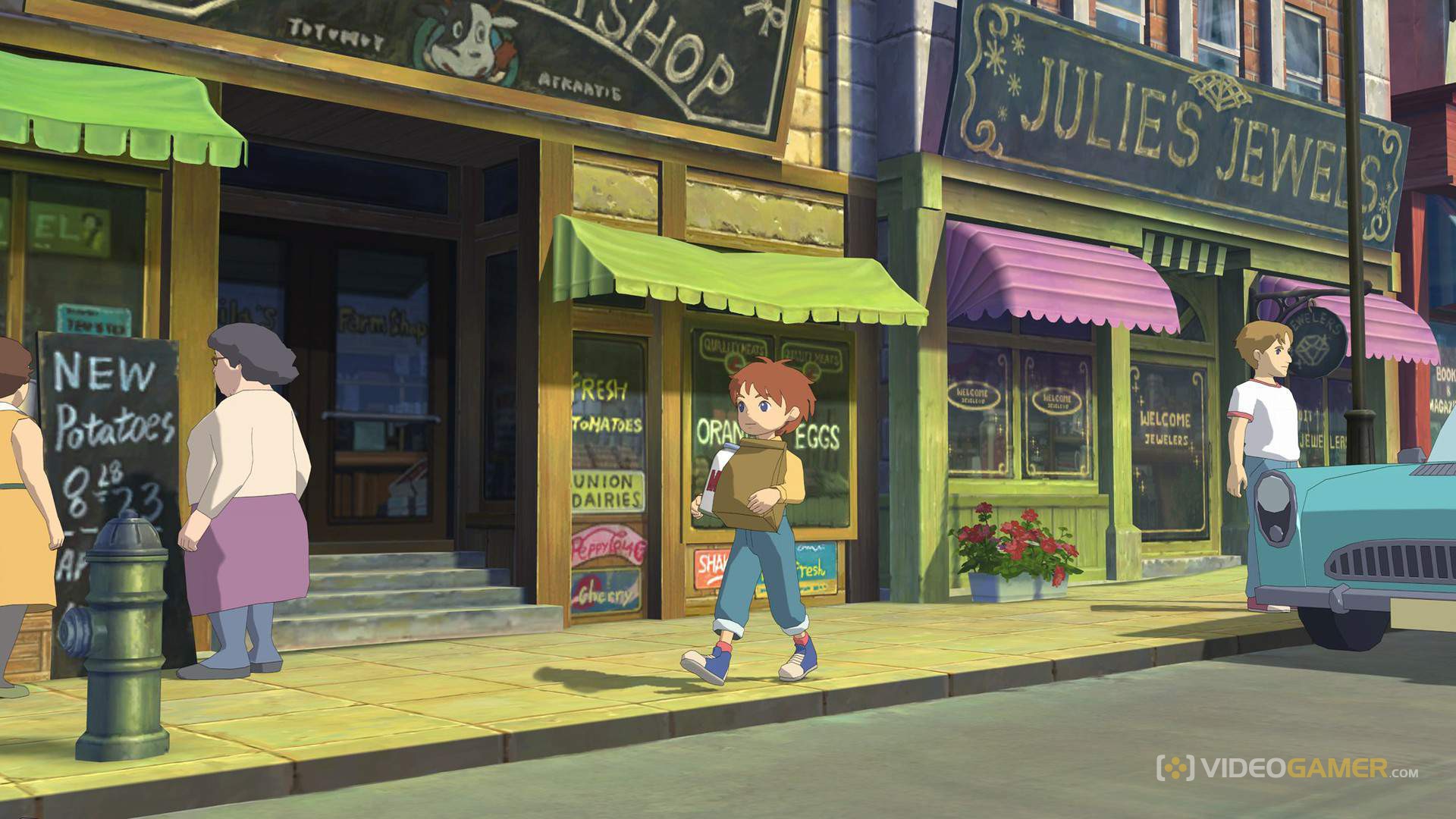


(I couldn't find a great gameplay demo video on youtube, but this one on Amazon gives you an idea of how it looks while playing.)
This last example isn't experienced through a screen - an artist called Shintaro Ohata is both a painter and a sculptor, and presents both as part of a whole piece, the sculpture being an extension of the painting and vice versa. His own website says: "He is known for his characteristic style; placing sculptures in front of paintings, and shows them as one work, a combination of 2-D and 3-D world."


I think all this experimenting, this merging of 2D and 3D worlds is a good thing. I personally love what's come from it so far. And I'm excited to see where we go from here.
(Part 3 will be the last in this series and then we can return to our regularly scheduled programming. I'll post a big old sketchdump this weekend.)
Friday, January 11, 2013
Video Friday
Today I'm pretending I have an actual blog and doing a little video roundup for yous guys. Some of it is art related, others are just things I found interesting on the internet. As a bonus, I've finally learned how to embed internet videos so that they no longer appear as tiny little squares in my posts, so. Get excited.
An interesting-looking new kids' web series. Bonus points for introducing young minds to the glory of steampunk (I am a pretty unapologetic steampunk nerd, expect to see much gears-and-dirigible-and-corset type art down the line once I move past, you know, learning how to draw.)
Andreas Deja a.k.a one of my favorite bloggers is making an animated film (unsure whether or not it will be a feature or a short). Here's his post on the film with some concept art.
A trailer for a new animated feature out of France with some really lovely animation.
Lately I have Macklemore & Ryan Lewis's The Heist on repeat (literally, I listened to it twice in a row today). Nobody seems to be talking about it, so in case you've somehow missed out on the smash hit that is "Thrift Shop," here is the music video for your watching pleasure.
This is the first track on the album. It's also become my new theme song, as soon as I actually listened to the words and realized what it was about. (Also, whoever actually watches this, the person got it wrong in the chorus, it's "hands" not "ants." But it sounds like ants so it's understandable. I guess it would be cool for ants to carry you? 10,000 presumably strange hands touching you could get a little weird.)
INSPIRATION
A great little inspirational video.
NEW YEAR
Some new years' fireworks exploding backwards which creates a very interesting visual. It's often the simplest ideas that are the most revolutionary.
2011 from hey_rabbit on Vimeo.
And last but not least - this was a video that went viral around this time last year. I really identified with this video when I saw it because, well firstly it's one of my favorite songs, and secondly because this girl was living my life, having an experience really similar to mine - she'd just moved to L.A., was discovering life after college in a new place with friends, learning how to love it and appreciate the little moments... I don't know if I'll be in L.A. forever, but for now, I'm loving this time in my life and being in this place. I'll always have a real place in my heart for this sprawling, beautiful Southern California city.
ANIMATION
An interesting-looking new kids' web series. Bonus points for introducing young minds to the glory of steampunk (I am a pretty unapologetic steampunk nerd, expect to see much gears-and-dirigible-and-corset type art down the line once I move past, you know, learning how to draw.)
Andreas Deja a.k.a one of my favorite bloggers is making an animated film (unsure whether or not it will be a feature or a short). Here's his post on the film with some concept art.
A trailer for a new animated feature out of France with some really lovely animation.
MUSIC
Lately I have Macklemore & Ryan Lewis's The Heist on repeat (literally, I listened to it twice in a row today). Nobody seems to be talking about it, so in case you've somehow missed out on the smash hit that is "Thrift Shop," here is the music video for your watching pleasure.
This is the first track on the album. It's also become my new theme song, as soon as I actually listened to the words and realized what it was about. (Also, whoever actually watches this, the person got it wrong in the chorus, it's "hands" not "ants." But it sounds like ants so it's understandable. I guess it would be cool for ants to carry you? 10,000 presumably strange hands touching you could get a little weird.)
INSPIRATION
A great little inspirational video.
NEW YEAR
Some new years' fireworks exploding backwards which creates a very interesting visual. It's often the simplest ideas that are the most revolutionary.
2011 from hey_rabbit on Vimeo.
And last but not least - this was a video that went viral around this time last year. I really identified with this video when I saw it because, well firstly it's one of my favorite songs, and secondly because this girl was living my life, having an experience really similar to mine - she'd just moved to L.A., was discovering life after college in a new place with friends, learning how to love it and appreciate the little moments... I don't know if I'll be in L.A. forever, but for now, I'm loving this time in my life and being in this place. I'll always have a real place in my heart for this sprawling, beautiful Southern California city.
Wednesday, January 2, 2013
Noah Bradley
Like many other people on the internet, I spend too much time on Reddit. I've had this AMA with concept artist/illustrator Noah Bradley bookmarked for some time and today I finally got the time to read it. Some of Noah's art:


The AMA is great - there's lots of good advice in there to start, but it ultimately led me to his blog and finally to this post called Stop Whining, Start Working. (It's on a similar subject as my earlier post about Letting the Learning Get in the Way.) I'll repeat his text here, as I felt like it was speaking straight to me:
Thanks Noah. And now I'm going to get off the internet and do some drawing. :)


The AMA is great - there's lots of good advice in there to start, but it ultimately led me to his blog and finally to this post called Stop Whining, Start Working. (It's on a similar subject as my earlier post about Letting the Learning Get in the Way.) I'll repeat his text here, as I felt like it was speaking straight to me:
I hear it all the time:
Am I talented enough? How much should I draw? Am I studying right? What’s the best way to use XYZ book? Art school or no art school? Do I need a degree? How will I know when I’m professional? What should I draw? Should I do more studies or finished work? What are the best materials? What kind of paint should I use? What pencil should I use? Are pencils or pens better to draw with? Should I draw big or small? Is it bad to draw from photos? Should I paint digitally or traditionally? Am I too old to start learning? Is Photoshop or Painter better? What’s the best way to hold a pencil? Where should I find inspiration? What do I do if I’m not inspired? How do I get through “artist’s block”? How long will it take to be a professional? Why does it feel like I’m not improving? Should I get a Moleskine? Is art dead? What is art? How do I do backgrounds? What are the best tutorials? What resolution should I work at? How do I come up with good ideas? What do I do if I stop enjoying art?
Well, I have the answer to all of your questions: it doesn’t matter. Really. It doesn’t. These questions are excuses, plain and simple. They are used by people who aren’t drawing or painting that want to get wrapped up in petty minutiae at the expense of their own work.
The fact is that if you want to make art, then you need to make art. I could answer every single question on this list and it wouldn’t make you the slightest bit better at drawing.
Now, I should qualify these statements before people start chucking rocks: these are mostly valid questions, with equally valid answers. They’re worth discussing at times, and are things that you’ll eventually figure out. But by and large, you’ll figure them all out for yourself by working. Notice a pattern here? Don’t be afraid to ask questions and research things, but be sure you’re not doing it at the expense of actually learning things.
So shut up, stop whining, and get to work.
Thanks Noah. And now I'm going to get off the internet and do some drawing. :)
Sunday, December 23, 2012
Dynamic Sketching Wrap-Up

Wednesday, December 5, 2012
Dynamic Sketching Week 7
So. I never thought I'd say this because I'm a stereotypical girl who couldn't tell a Mazda from a Maserati. But... I fucking love drawing cars.


This was also the first week that I actually felt like I did a good job on the redesign. Some friends and I visited the new Cars Land in California Adventure on Thanksgiving weekend, and it got me thinking about a car character - a nervous professor type which I ultimately based off of a Ford Model T Roadster.


I still don't really know how to render anything, especially reflective shit like cars. But in general, the cars assignment has really REALLY helped me to see form and perspective the way I should be seeing it when I draw. I'm definitely starting to look bigger picture, think about simplification, and keep details for later (if at all).
This week is tanks. I'm still a stereotypical girl in that I'm kind of meh about tanks. The military museum we went to on Saturday was cool, but since then I've drawn a grand total of ONE tank. I'm looking forward to planes though (next week).
By the way: now I CAN tell a Mazda from a Maserati. Hooray for learning.


 |
| Not exactly a car. A horse-drawn fire engine from 1913. |


 |
| 1979 called. |
 |
| Couldn't draw a bunch of cars without getting in a few DeLoreans |
 | ||
| Chitty Chitty Bang Bang was left unfinished because I realized I was running out of time for my redesign. Also I realized way late that I somehow COMPLETELY botched the perspective but WHATEVER |


I still don't really know how to render anything, especially reflective shit like cars. But in general, the cars assignment has really REALLY helped me to see form and perspective the way I should be seeing it when I draw. I'm definitely starting to look bigger picture, think about simplification, and keep details for later (if at all).
This week is tanks. I'm still a stereotypical girl in that I'm kind of meh about tanks. The military museum we went to on Saturday was cool, but since then I've drawn a grand total of ONE tank. I'm looking forward to planes though (next week).
By the way: now I CAN tell a Mazda from a Maserati. Hooray for learning.
Friday, November 30, 2012
Today's Mutts
Mutts by Patrick McDonnell has always been one of my favorite comic strips. Today's perfectly summed up my life right now.

Tuesday, November 27, 2012
Dynamic Sketching Week 5 & 6
Class sketchbook roundup!


We were supposed to do 6 pages that week, but Lauren and Justin were visiting that week so I only got through 4.
This week is cars again - last class we went to the Nethercutt Classic Car Museum in Sylmar, which was actually awesome. In general I'm liking vehicles more than I thought I would. I tend to draw more organic things usually. But I enjoy the straight lines and the perspective and the shape variation. Learning to appreciate the design of vehicles more.
To be honest, the part of the class I'm having the hardest time with is the redesign projects. Everyone else's are always so good, they come up with such creative things and seem to really enjoy exploring them. I can never seem to think of anything that I get really excited about. We're supposed to do several pages of design work before coming up with a final version - but I'll draw a few different versions and then get stuck about where to take it next. Not sure why that is. It's discouraging because I love drawing from imagination, and that's really what concept design IS, being able to conceive of many different versions of something and then take it to a finished design. But I feel like I do my best work when I'm drawing from life.
It's been a long time since I had to use my brain in this way. But it's great practice for sure. Overall I've definitely seen a huge improvement in my own work since the beginning of the class. I feel like I'm beginning to draw forms instead of lines. I think that's why I love drawing cars so much, actually - it's much easier to see the forms. It's just boxes and cirlces. And everything's symmetrical. What is on one side will be exactly the same on the other.
Week 5 - Animals
Most of these were done at the zoo and then colored later.


Week 5 Redesign
Hanglider based on bat anatomy.


Week 6 - Cars, Tanks and Planes
These are all from reference - toys or internet photos.


We were supposed to do 6 pages that week, but Lauren and Justin were visiting that week so I only got through 4.
This week is cars again - last class we went to the Nethercutt Classic Car Museum in Sylmar, which was actually awesome. In general I'm liking vehicles more than I thought I would. I tend to draw more organic things usually. But I enjoy the straight lines and the perspective and the shape variation. Learning to appreciate the design of vehicles more.
To be honest, the part of the class I'm having the hardest time with is the redesign projects. Everyone else's are always so good, they come up with such creative things and seem to really enjoy exploring them. I can never seem to think of anything that I get really excited about. We're supposed to do several pages of design work before coming up with a final version - but I'll draw a few different versions and then get stuck about where to take it next. Not sure why that is. It's discouraging because I love drawing from imagination, and that's really what concept design IS, being able to conceive of many different versions of something and then take it to a finished design. But I feel like I do my best work when I'm drawing from life.
It's been a long time since I had to use my brain in this way. But it's great practice for sure. Overall I've definitely seen a huge improvement in my own work since the beginning of the class. I feel like I'm beginning to draw forms instead of lines. I think that's why I love drawing cars so much, actually - it's much easier to see the forms. It's just boxes and cirlces. And everything's symmetrical. What is on one side will be exactly the same on the other.
Wednesday, November 14, 2012
Disney's Multiplane Camera and other stories
Sorry again for the lack of posts lately. I know I'm really disappointing the 3 people who read this on a regular basis.
Once life returns to a more normal schedule, I'll have lots of new sketches to post, but in the meantime, I thought I'd share this delightful and informative archive Disney video.
I love this little video for a lot of reasons, but mainly because it seems like Disney, and those around him, put as much thought and effort into the making of his how-to, behind-the-scenes videos as he did into his actual movies. This film, which could easily have ended up very technical, has a story and a soundtrack. Even some acting (around 5:45 - I cracked up at this part). The Disney company in that time was full of master storytellers and artists. And still is - although it's obviously changed a lot!
It also strikes me how much a real work of art those old films were. Hand-drawn cels and oil-painted glass backgrounds that someone would manually wheel to the side in increments. If you dropped one of those sheets of glass while loading it up for the camera, hours of someone's hard work was gone instantly. The finished film was the result of tens of thousands of hours of creative people bent over desks, painstakingly DRAWING and painting, frame by frame. Those films were created by a small group of people and they took a long time to do it. Nowadays we have inconceivably large crews, so long that the end credits take 15 minutes or more on most animated films. They work on computers, creating intangible files on hard drives and backed up online. And animation companies produce a film every other year. "The world went and got itself in a big damn hurry."
Speaking of Disney, I wanted to point anyone interested to another incredible art blog - Deja View, by Andreas Deja, an animator who started at Disney in the 70s and was part of the Disney revival in the 80s and 90s, working on such films as The Little Mermaid and Beauty and the Beast, all the way through Lilo & Stitch. His posts are always fascinating insights and tidbits from the Disney archives - he collected and saved much of the art from the earlier days of the studio, films like Sleeping Beauty, Robin Hood, Lady and the Tramp. Here's a great sample post with rough sketches for 101 Dalmations. And another one about the challenges of tough poses that animation presents.
Post-Script: Disney's latest animated film, Wreck-It Ralph, is in theaters now and it's GREAT. Do not miss. Lots of cool easter eggs for those of us who love videogames - but the real power of the film is in its story and characters, which are universal even to those who have never stepped in an arcade or held a controller.
Post-post-script: I just found out yesterday that Linds Redding, the writer of 'A Short Lesson in Perspective,' died recently and that's why his post is gaining so much traction lately. Very sad.
Once life returns to a more normal schedule, I'll have lots of new sketches to post, but in the meantime, I thought I'd share this delightful and informative archive Disney video.
I love this little video for a lot of reasons, but mainly because it seems like Disney, and those around him, put as much thought and effort into the making of his how-to, behind-the-scenes videos as he did into his actual movies. This film, which could easily have ended up very technical, has a story and a soundtrack. Even some acting (around 5:45 - I cracked up at this part). The Disney company in that time was full of master storytellers and artists. And still is - although it's obviously changed a lot!
It also strikes me how much a real work of art those old films were. Hand-drawn cels and oil-painted glass backgrounds that someone would manually wheel to the side in increments. If you dropped one of those sheets of glass while loading it up for the camera, hours of someone's hard work was gone instantly. The finished film was the result of tens of thousands of hours of creative people bent over desks, painstakingly DRAWING and painting, frame by frame. Those films were created by a small group of people and they took a long time to do it. Nowadays we have inconceivably large crews, so long that the end credits take 15 minutes or more on most animated films. They work on computers, creating intangible files on hard drives and backed up online. And animation companies produce a film every other year. "The world went and got itself in a big damn hurry."
Speaking of Disney, I wanted to point anyone interested to another incredible art blog - Deja View, by Andreas Deja, an animator who started at Disney in the 70s and was part of the Disney revival in the 80s and 90s, working on such films as The Little Mermaid and Beauty and the Beast, all the way through Lilo & Stitch. His posts are always fascinating insights and tidbits from the Disney archives - he collected and saved much of the art from the earlier days of the studio, films like Sleeping Beauty, Robin Hood, Lady and the Tramp. Here's a great sample post with rough sketches for 101 Dalmations. And another one about the challenges of tough poses that animation presents.
Post-Script: Disney's latest animated film, Wreck-It Ralph, is in theaters now and it's GREAT. Do not miss. Lots of cool easter eggs for those of us who love videogames - but the real power of the film is in its story and characters, which are universal even to those who have never stepped in an arcade or held a controller.
 |
| "I am bad, and that's good. I will never be good, and that's not bad. There's no one I'd rather be than me." |
Subscribe to:
Posts (Atom)